When Your Kubota Mini Digger Won't Start: The Truth About a Spare Kubota Digger Key
@thesparekubotadiggerkeyexpert
I have spent enough hours in a muddy cab to know that feeling. The engine turns over, the hydraulics groan, and then nothing. You check the fuel, you check the battery, you check the fuel filter. And then you realise the real problem is the key. Not a broken key, not a worn key, but the fact that you have only one. That single moment on a wet Tuesday in Dorset taught me more about machine keys than any manual ever could. A spare Kubota digger key is not a luxury item. It is a piece of operational insurance that every owner-operator and hire fleet manager should treat as essential.
The One-Key Problem
Running a Kubota mini digger on a single key is a risk that most people do not think about until it is too late. The key lives on a ring with a dozen others. It gets dropped into a toolbox, kicked under a seat, or left in the ignition overnight on a site that has no lighting. When that key goes missing, the machine is dead. You cannot hot-wire a modern excavator. The immobiliser systems on a Kubota KX series or a Terracotta are robust. Without the correct key, the machine will not start. That means wasted hire time, missed deadlines, and the cost of a service call to get a replacement key cut and programmed on site.
I have seen a contractor spend an entire morning waiting for a locksmith to arrive at a site near Bristol because nobody had a spare Kubota digger key. The locksmith charged a premium for the call-out, and the machine was idle for four hours. The job ran into the next day. That is the real cost of not having a backup. It is rarely the price of the key itself. It is the lost hours, the frustrated client, and the knock-on effect on the next job.
Not All Keys Are the Same
A lot of people assume that a replacement key for a Kubota mini digger is just a matter of cutting a piece of metal to the right shape. That might have been true twenty years ago. It is not true now. The machines that Kubota builds today, from the compact Kubota U10 to the larger Kubota U35, use transponder chips embedded in the key head. The key cutting is only half the job. The other half is key programming. Without the correct electronic code, the key will turn the lock barrel but the machine will not start. You need the key to match the immobiliser system fitted to that specific excavator.

That is where a specialist like Kubota Keys comes in. They have been doing this since 2010, which is long enough to have seen every generation of Kubota security system. They understand the difference between a key for a Kubota U15 and one for a Kubota U27. The U17 and U25 models have their own quirks. The Terracotta range, which is essentially a Kubota mini digger under the paint, uses the same key technology. A generic key cutting service will not help you there. You need someone who knows the machines and stocks the correct blanks and programming equipment.
Where to Get a Spare Kubota Digger Key
The obvious answer is your local Kubota dealer. They will order a key from the manufacturer, and it will be correct. But that route can be slow. Dealers often batch orders, and if your machine is an older model like the Kubota U10, the key might not be a stock item. You wait a week or two. For a professional operator, that is too long.
The alternative is a dedicated replacement key service. Companies like Kubota Keys keep a stock of most common Kubota mini digger keys on the shelf. They can cut and program a key from the code stamped on your existing key or from the machine serial number. Their postal service is fast, often next day in the UK. You send them a photo of your key or the code number, and they send back a working replacement. That speed matters when your machine is down and you have a trench to dig before the weekend.
I have used their service myself for a Kubota U17 that I run on a small holding. The original key was getting stiff in the lock, and I wanted a backup before it snapped. I ordered a spare Kubota digger key on a Wednesday afternoon. It arrived on Thursday morning. It worked first time. That is the kind of service that keeps a machine earning.
Key Programming Is Not a Mystery
Some people are wary of key programming. They think it involves specialist software or a trip to a dealership. In reality, the process is straightforward for anyone who knows the system. The key contains a small transponder that communicates with the machine's immobiliser. When you insert the key and turn it, the machine reads the transponder code. If the code matches, the engine starts. If it does not, the machine stays locked.
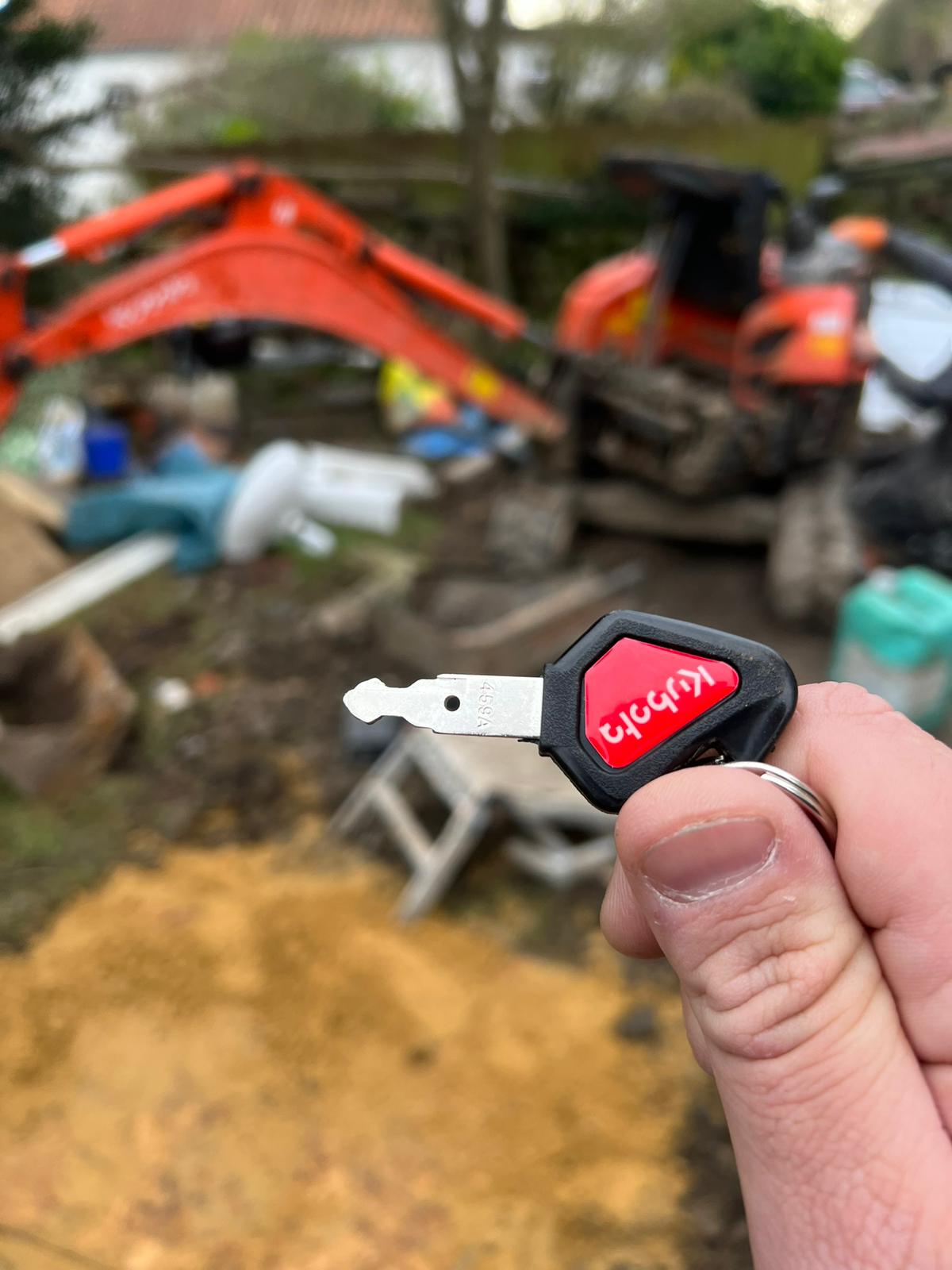
Programming a new key usually involves either cloning the code from an existing key or using the machine's own programming procedure. Some models allow you to add a new key by turning the ignition on and off in a specific sequence. Others require a programming tool that writes the code to the key. A reputable supplier will handle all of that before they send the key to you. You receive a key that is ready to use. No fiddling, no guesswork.
Which Models Need What
If you own a Kubota mini digger, the model number tells you a lot about the key you need. The Kubota U10 and U15 use an older style of transponder key. The Kubota U17 and U25 use a slightly different chip. The Kubota U27 and U35 have their own codes. The Terracotta machines, which are often rebadged for the landscaping market, share the same key system as the equivalent Kubota model. The Kubota KX range, which includes the compact excavators, also uses transponder keys. The ICO models, which are smaller ride-on machines, have their own key type.
The important thing is to check your key code before you order. The code is usually stamped on the metal part of the key or on the plastic head. If the code has worn off, a specialist can often identify the correct key from the machine serial number. Do not guess. A key that is close but not exact will turn the lock but will not start the engine. That is a waste of money and time.
Practical Advice for Keeping Your Keys Safe
I have learned a few things the hard way. Keep your spare key somewhere separate from the machine. Do not keep it in the cab, do not keep it in the same toolbox, and do not keep it on the same key ring. If someone walks off with your main key, you want the spare to be in a different place. A locked drawer in your workshop or in the office is a good spot. If you run a hire fleet, keep a set of spare keys in a secure cabinet and log every issue.
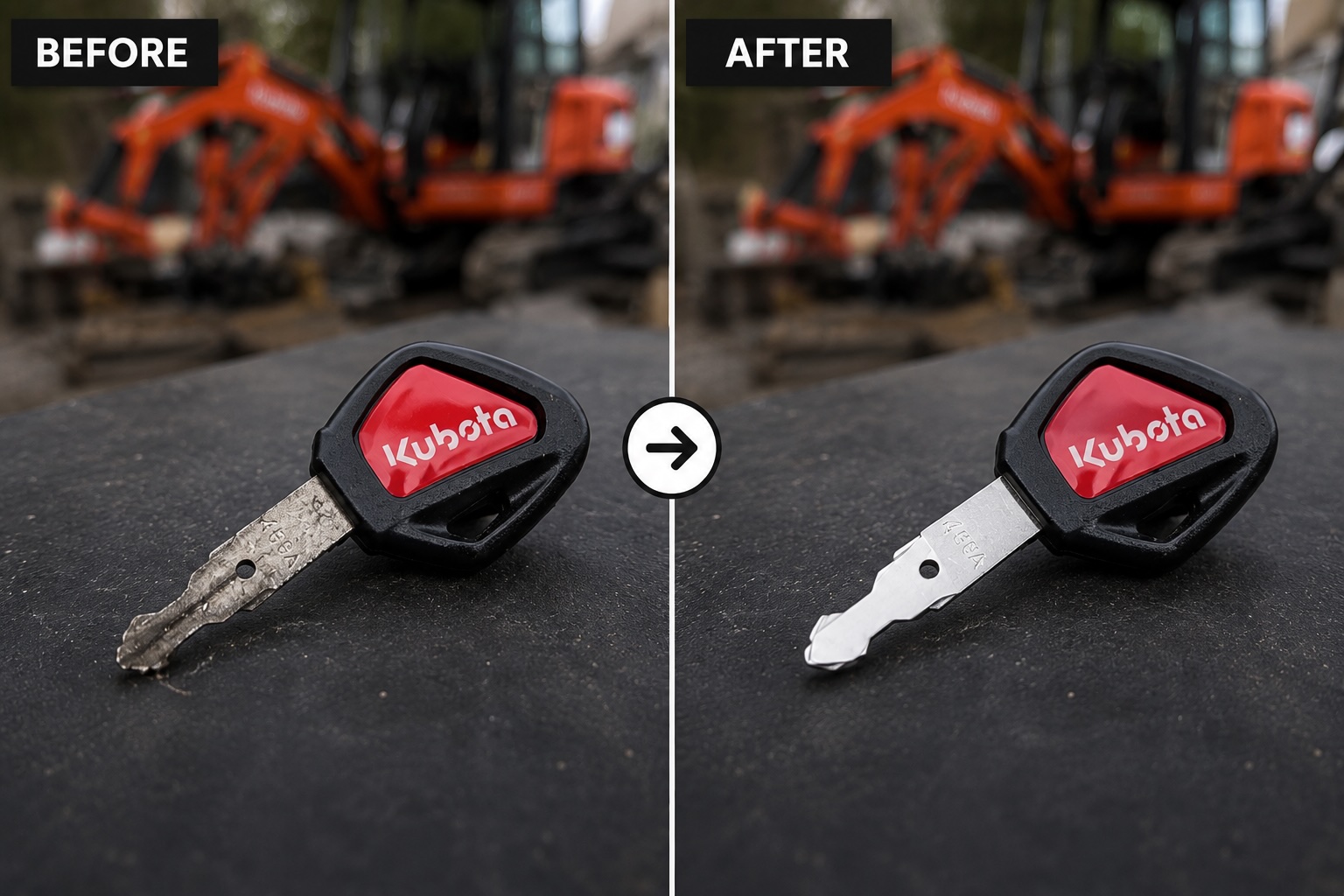
It also pays to check your key regularly. The transponder chip can fail over time, especially if the key is exposed to water or mud. A key that works today might stop working next month. Having a spare that you test every few weeks gives you a backup that you can trust. When you order a spare Kubota digger key, test it as soon as it arrives. Do not wait until you need it.
The Bottom Line
A Kubota mini digger is a serious piece of construction equipment. It costs thousands of pounds and earns its keep every day. Skimping on a replacement key is a false economy. The price of a spare key is small compared to the cost of downtime. Whether you run a single machine on a farm or a fleet of excavators on a housing development, having a spare key on hand is basic common sense.
The UK has good options for getting a spare Kubota digger key quickly. The key cutting and key programming services offered by specialists mean you do not have to wait for a dealer. You can have a working key in your hand within a day or two. That speed keeps your machine working and your jobs on schedule. Do not wait until you are standing in a wet field with a dead machine. Order a spare now, before you need it.